
WPA Collection
An historically important and visually thrilling collection of American art
The Works Progress Administration (WPA) art collection of the T.W. Wood Museum is one of the finer collections of mid-20th-century American art in Northern New England.
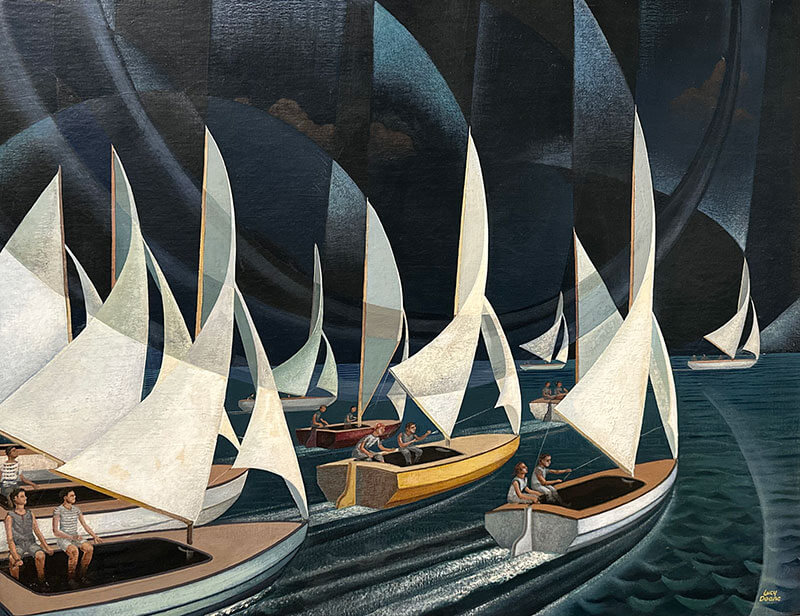
The WPA was a 1930’s program that gave employment to thousands of people during the Great Depression.
The WPA: Art Born from the Great Depression
The WPA was a 1930s federal program that gave employment to thousands of people during the Great Depression. While it is primarily known for its infrastructure work—roads, bridges, tunnels, and public buildings, many of which still exist in Montpelier (such as the Langdon, School, and Granite Street bridges, Union Elementary School, and the Elm Street Recreation Field and Pool)—the WPA also left a lasting artistic legacy.
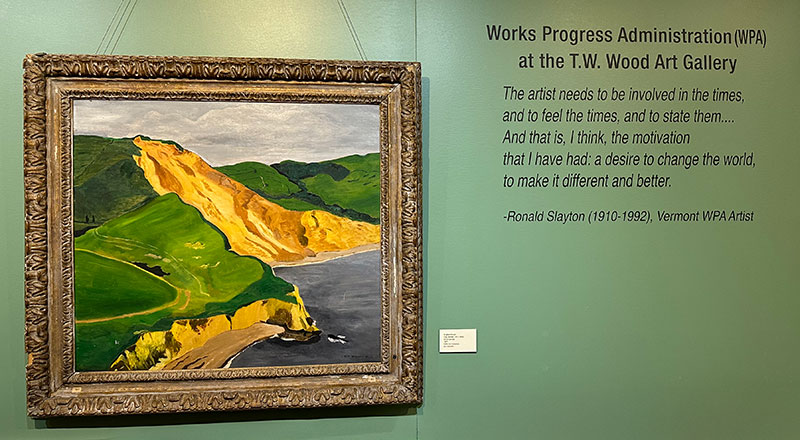
The Federal Arts Project
The WPA’s Federal Arts Project employed thousands of artists across the country, supporting art centers, teaching programs, and the direct creation of artwork. Tens of thousands of works were produced. When the program ended after World War II, the government distributed the art to institutions nationwide, including the T.W. Wood Museum.
The T.W. Wood Museum is the only original WPA art repository in Northern New England, and one of the few in the U.S. that dedicates an entire gallery to its WPA collection. The WPA also funded the creation of hundreds of murals across the country, many of which still exist in New England communities.
Art as Social Resistance
Much of the WPA art reflects the social struggles of the 1930s and 40s—a time when industrialization and failed economic policies left millions unemployed and destitute. The Great Depression was the deepest and longest economic downturn in the history of the Western industrialized world, and art became both a reflection of hardship and a symbol of resilience.
The T.W. Wood Museum WPA collection captures this complex climate. Within the works, visitors will find evidence of economic struggle alongside depictions of everyday life, leisure, landscapes, and community—offering both stark reality and a sense of harmony.
Styles and Genres Represented
The collection features a wide range of genres and movements, from traditional to emerging styles of the 1930s and 40s, including:
- Abstract Expressionism
- Social Realism
- Cubism
- Representationalism
- Impressionism
- Landscape and portrait painting
The Collection Today
The T.W. Wood Museum is home to more than 100 WPA-era works, including easel paintings (oil, watercolor, gouache), sculpture, and graphic arts such as prints and drawings. While most came directly from the WPA, some have been added through donations over the years.
To keep the experience fresh, the exhibit is rotated throughout the year, giving visitors the opportunity to encounter the full depth of this extraordinary collection over multiple visits.